Uncategorized
The Bees Are Gone—So Why Is There Still a Problem Inside Your Wall or Roof?

Seeing the last bees disappear from your home can feel like the end of the problem.
No more bees flying around the eaves. No more steady traffic disappearing into a crack in the stucco. No more buzzing near the roofline.
But if an established honeybee colony was living inside a wall, attic, eave, or roof cavity, the disappearance of the bees does not necessarily mean everything associated with the hive disappeared with them.
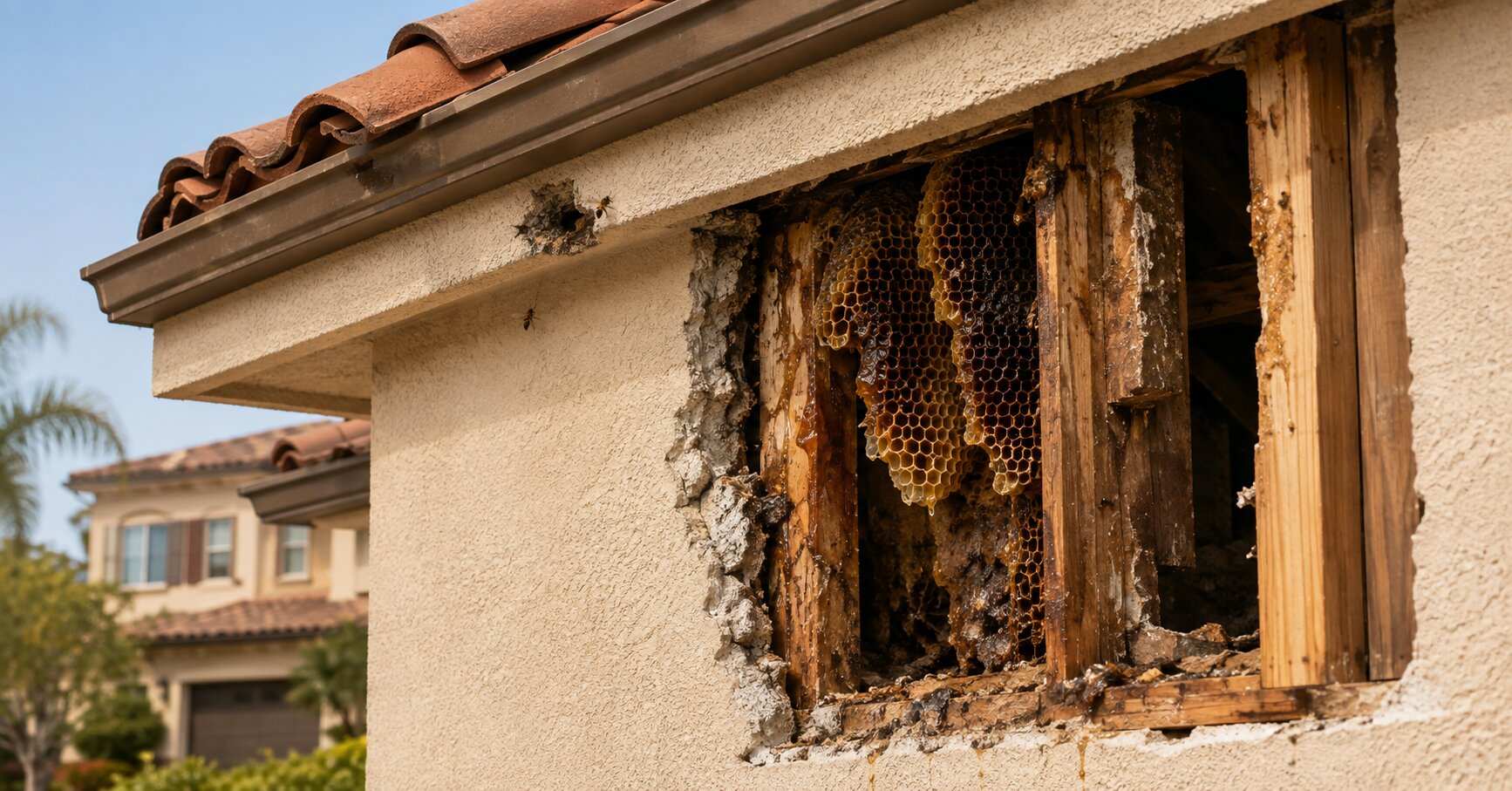
Behind that small exterior opening may still be honeycomb, stored honey, wax, pollen, and other hive material that accumulated while the colony occupied the structure.
For Orange County homeowners, understanding what may remain after the bees are gone is important—especially before sealing the opening and forgetting about it.
A Small Exterior Opening Can Hide a Much Larger Hive
One of the surprising things about a structural bee colony is how little homeowners may see from outside.
You might notice bees entering:
- A small crack in stucco
- Beneath a roof tile
- Behind an eave or fascia board
- Through a soffit opening
- Around a vent
- Near a chimney
- Through a utility penetration
The opening itself may be tiny.
The cavity behind it can be much larger.
Honeybees commonly nest in protected cavities, including spaces inside houses. UC Integrated Pest Management notes that removing an established colony from a building may involve opening the structure so the bees and their combs can be taken out.
That distinction matters.
Removing or eliminating the bees addresses the active colony.
Removing what they built addresses what the colony may have left behind.
What Can Be Left Inside the Structure?
An established honeybee colony does much more than occupy an empty space.
Inside the cavity, the bees build wax comb containing cells used for raising young and storing food.
Depending on how established the colony became, the cavity may contain:
- Sheets of honeycomb
- Stored honey
- Beeswax
- Pollen
- Brood-related material
- Colony odors and residues
What remains depends on the size, age, and location of the hive.
A colony that recently moved into an opening may have produced relatively little comb. A colony that has occupied a protected wall or roof cavity for an extended period may have created a substantial hive.
This is one reason homeowners dealing with bees inside walls may discover that the problem extends much farther into the structure than the exterior entrance suggests.
Honey Can Become a Problem When Nobody Is Maintaining the Hive
Inside a healthy colony, worker bees maintain the comb and regulate conditions within the hive.
Once the colony is gone, that maintenance stops.
Honey remaining inside unsupported or damaged comb may eventually create problems if it leaks into surrounding building materials.
Depending on the location, homeowners might notice:
- Sticky residue
- Yellow or brown staining
- Discoloration on drywall
- Unusual sweet odors
- Moisture-like marks appearing on ceilings or walls
A roof or attic colony can be particularly easy to overlook because the honeycomb may be several feet away from the exterior opening where the bees were originally seen.
Homeowners who have had bees entering the roofline should understand how bees in attics, eaves, and roof tiles can establish themselves in concealed structural spaces.
Remaining Hive Material Can Attract Other Activity
A former hive represents a concentrated source of organic material.
Honey, wax, pollen, and other residues may become attractive to other insects or pests once the honeybee colony is no longer defending and maintaining the cavity.
This is another reason complete structural cleanup can matter after an established colony is removed.
University of Arizona Extension recommends that when a honeybee colony is removed from a structural void, the interior should be cleaned out completely and the entrance points sealed afterward.
The important word there is afterward.
Cleaning out the old hive and eventually closing the opening are different steps from simply blocking the entrance while an active colony is still inside.
Why You Shouldn’t Immediately Seal the Opening
Imagine watching bees use a small opening beneath your roof for several weeks.
One day, the activity stops.
The obvious reaction may be:
Great. I’ll seal the hole before they come back.
That may eventually be part of the solution—but first, it is important to determine what actually happened to the colony and whether hive material remains inside.
An opening should not simply be sealed while bees are still actively occupying the cavity. Blocking their normal exterior route can cause bees trapped inside to search for another exit.
Depending on the structure, that could mean moving farther through:
- Wall cavities
- Attics
- Vents
- Ceiling openings
- Light fixtures
- Other gaps leading toward occupied rooms
If bees suddenly begin entering the living area, the problem has moved from inconvenient to potentially urgent.
The Bee Man provides emergency bee, wasp, and yellow jacket removal in Orange County for situations where stinging insects are creating an immediate problem around a home or occupied building.
How Do You Know Whether Honeycomb Is Still Inside?
Unfortunately, homeowners usually cannot tell simply by looking at the exterior entrance.
Possible clues include:
- The colony had been present for a significant amount of time.
- Large numbers of bees repeatedly used the opening.
- Buzzing had been heard inside walls or ceilings.
- Honey odors were noticeable.
- Staining or sticky residue appeared.
- Bees had occupied the same location before.
- The colony was located inside a substantial structural cavity.
The longer an established colony occupied the space, the greater the possibility that significant comb was built.
That does not mean homeowners should begin cutting into drywall or removing roof tiles themselves.
Locating the actual hive is part of determining what kind of removal or cleanup is appropriate.
The Bee Entrance May Not Be Where the Honeycomb Is
This is another part of structural bee activity that surprises homeowners.
The opening used by the bees does not necessarily reveal exactly where the hive is located.
Bees may enter through one gap and travel farther through the structural cavity before reaching the comb.
That is why watching their movement can be useful.
If you have ever noticed bees following almost exactly the same route toward your home every day, our previous article on why bees follow the same flight path every day explains how consistent traffic can offer clues about where a colony may be entering.
The entrance tells you where the bees are getting in.
It does not necessarily tell you everything that is happening behind it.
What About Bees That Keep Returning to the Same Area?
A homeowner may have a colony removed and later notice bees investigating the same roofline, wall opening, or structural cavity again.
There can be several reasons bees repeatedly inspect a property, including the availability of a protected cavity and remaining access points.
That is why exclusion becomes important after the existing hive has been dealt with.
Once the colony and appropriate hive material have been addressed, cracks and openings that provide access can be repaired or sealed.
Otherwise, the same sheltered space may remain available to future scout bees searching for a nesting location.
Walls and Roofs Create Different Challenges
A hive inside a wall is not exactly the same as a hive beneath roof tiles or inside an attic.
Inside Walls
Wall cavities can hide substantial comb between studs or within larger structural voids.
Homeowners may initially notice:
- Buzzing
- Repeated traffic through stucco
- Bees around utility penetrations
- Bees appearing indoors
- Wall staining
The Bee Man’s guide to bee removal from walls in Orange County explains the warning signs of an established structural colony.
Inside Roofs and Attics
Roof colonies may be accessed through gaps beneath tiles, eaves, soffits, vents, or flashing.
The visible entrance can be separated from the actual comb location by portions of the attic or roof structure.
This makes professional evaluation especially useful before roof tiles, fascia, drywall, or other materials are disturbed.
What Should Orange County Homeowners Do After Bees Are Removed?
The next step depends on what kind of bee activity occurred.
If the bees were simply a temporary swarm resting outdoors and never established a hive inside the building, there may be no structural honeycomb to address.
If the colony had established itself inside a wall, attic, roof, or another cavity, the situation is different.
A reasonable post-removal process may include:
- Determine whether an established hive was present.
- Identify where the comb was located.
- Address remaining honeycomb and hive material when necessary.
- Inspect the surrounding building materials for residue or staining.
- Repair the access area as appropriate.
- Seal suitable entry points after the colony has been fully addressed.
- Continue watching the area for recurring bee activity.
UC IPM’s guidance on established building colonies specifically describes removal as involving both the bees and their combs rather than treating only the insects visible at the entrance.
Don’t Confuse a Quiet Entrance With a Solved Problem
The most important takeaway is simple:
No visible bees does not automatically mean there is nothing left inside the structure.
If bees lived inside a wall or roof long enough to establish a hive, they may have left much more behind than homeowners could ever see from outside.
The right time to think about honeycomb, cleanup, repairs, and sealing is not months later when a stain or new bee activity appears. It is part of understanding what happened after an established colony is removed.
For homeowners dealing with structural bee activity, professional bee removal in Orange County can help determine whether the insects are simply passing through or whether a colony has established itself inside the property.
The Bee Man has specialized in bee, beehive, wasp, and yellow jacket removal since 1977 and serves homes and businesses throughout Orange County.
If you suspect a hive may still be hidden inside your wall, attic, eaves, or roof, call (949) 455-0123.