Health
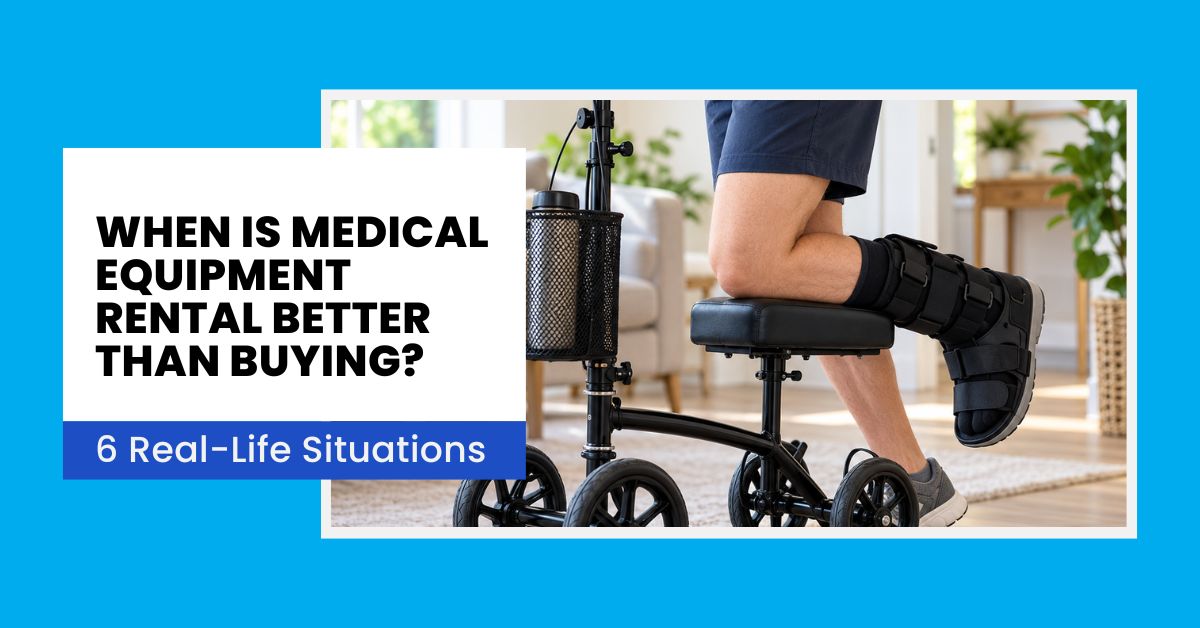
When Is Medical Equipment Rental Better Than Buying? 6 Real-Life Situations

When someone suddenly needs medical or mobility equipment, buying may seem like the obvious solution.
But not every mobility challenge is permanent, and not every piece of equipment will be needed for years.
Someone recovering from surgery may need a wheelchair for several weeks. A person with a foot or ankle injury might need a knee scooter temporarily. A family member coming home from the hospital may need a hospital bed during the early stages of recovery but not once they’re moving around more independently.
In situations like these, renting can provide access to useful equipment without purchasing something that may soon sit unused.
For families considering equipment rental Riverside, having an established local medical supply store in Riverside can also make it easier to ask questions, compare options, and determine whether renting or buying makes more sense.
The decision usually comes down to a few practical questions: How long will the equipment be needed? Is the person’s condition temporary or permanent? Are their mobility needs likely to change? And does purchasing make financial sense for the expected length of use?
Here are six real-life situations where medical equipment rental may be worth considering.
1. You’re Recovering From Surgery
Surgery is one of the clearest examples of a temporary need for medical equipment.
Someone may normally be completely independent but return home from a procedure with significant mobility restrictions.
Depending on the surgery and healthcare instructions, temporary equipment could include:
- Wheelchairs
- Knee scooters
- Hospital beds
- Patient lifts
- Mobility scooters
- Oxygen equipment
- Bathroom safety equipment
The important consideration is how long that equipment will actually be necessary.
A patient may need substantial assistance during the first few weeks at home but gradually regain strength and mobility as recovery progresses.
Buying every piece of equipment needed during those early weeks may not make sense.
Renting can allow families to prepare the home before discharge and return equipment when it is no longer necessary.
Planning ahead is particularly important. If surgery is scheduled, ask the healthcare team what limitations to expect before the patient comes home.
That gives the family time to arrange equipment instead of searching for it after discharge.
2. You Have a Temporary Foot, Ankle, or Lower-Leg Injury
A broken foot, ankle surgery, or another lower-leg injury can make ordinary activities surprisingly difficult.
Moving around the house, preparing food, getting to appointments, and completing basic errands can all become more complicated when someone has been instructed to limit or avoid putting weight on one leg.
Crutches are one option, but they aren’t ideal for everyone.
For an appropriate patient, a knee scooter rental may provide another temporary mobility option during recovery.
Because many lower-extremity injuries eventually heal, purchasing a knee scooter may not always be necessary.
Someone might only need the equipment for several weeks or a few months. Once normal weight bearing resumes, the scooter may no longer serve a purpose.
Renting can make particular sense when the expected recovery period is relatively short.
However, a knee scooter isn’t appropriate for every person or injury. Balance, strength, home layout, weight-bearing restrictions, and the specific procedure all matter. Patients should follow the mobility guidance provided by their healthcare professionals.
3. A Loved One Is Coming Home From the Hospital
Hospital discharge can happen quickly.
Families sometimes discover that the home isn’t prepared for the person’s new mobility or care needs until they’re already trying to manage the transition.
Someone who walked independently before hospitalization may return home weaker or less stable. Another person may need help getting into bed, bathing, standing, or traveling to follow-up appointments.
Temporary equipment can make that transition easier to manage.
Depending on individual needs, families might consider a hospital bed, wheelchair, patient lift, walker, mobility scooter, or other recovery equipment.
The key word is temporary.
A person’s needs during the first week home may be completely different from their needs six weeks later. Rental equipment can give families more flexibility during that changing period.
Instead of trying to predict exactly what the person will need months from now, families can focus on what will help make the immediate recovery environment safer and more manageable.
Equipment is only one part of preparing for the transition home. Simple changes to daily routines and the home environment can also help. Families caring for an older loved one may find these small changes that make caring for aging parents less stressful helpful when mobility, safety, and everyday needs suddenly change.
Planning before discharge whenever possible can make the transition easier for both the person recovering and the family members helping them.
4. Your Mobility Needs Are Likely to Change
Sometimes it’s difficult to know what someone’s long-term mobility needs will be.
A person recovering from an illness, injury, or procedure may initially need substantial support but improve over time.
For example, someone could move through several stages of recovery. They may initially rely on a wheelchair for longer distances, later transition to a walker, and eventually be able to walk independently again.
Purchasing expensive equipment during every stage may not make sense when those needs are expected to change.
This is where medical equipment rental can provide flexibility.
Instead of assuming the first piece of equipment will be the long-term solution, families can respond to changing needs as recovery progresses.
It’s also important to reassess mobility rather than continuing to use equipment simply because it’s already in the home.
Equipment should match the person’s current abilities, healthcare instructions, and environment.
5. You Need Equipment for Travel or a Short-Term Visit
Medical equipment isn’t only needed because of surgery or injury.
Sometimes a person has a long-term mobility limitation but only needs additional equipment temporarily because of travel.
For example, someone who normally walks independently around the house may find that a vacation, family gathering, convention, graduation, or other event involves much longer distances.
A mobility scooter or wheelchair could make the outing more manageable without becoming something the person needs every day.
The same issue can arise when an older parent or relative comes to stay with family.
Their usual equipment may be difficult to transport, particularly if it is large or heavy.
Depending on availability, renting equipment near the destination may be easier than transporting certain items back and forth.
Before renting, consider where the equipment will be used, how it will be transported, whether it fits in the vehicle, and whether the environment is appropriate for the equipment.
6. You Want to Understand Your Needs Before Making a Long-Term Purchase
Mobility equipment can be a significant purchase.
If someone expects to need a wheelchair, mobility scooter, hospital bed, or other equipment for an extended period, purchasing may ultimately make more sense.
But families shouldn’t feel pressured to make a long-term decision before they understand what the person actually needs.
During a changing recovery period, renting may provide additional time to determine what type of equipment will be most useful.
For example, someone may initially believe they need one type of mobility solution but discover that their home layout, transportation needs, physical abilities, or daily routine make another option more practical.
This is also one reason local medical equipment providers can be helpful.
Being able to ask questions and discuss how equipment will actually be used can help families make more informed decisions instead of simply ordering a product based on a picture online.
When Does Buying Make More Sense?
Rental isn’t always the better option.
If someone expects to use equipment every day for a long period, purchasing may be more practical.
Buying may make sense when:
- The mobility need is expected to be long term
- The equipment will be used frequently
- The person wants a specific model or features
- The equipment requires significant personalization
- The expected rental period would make purchasing more economical
- The person is confident the equipment suits their long-term needs
The decision shouldn’t be based entirely on the initial price.
Think about expected length of use, maintenance, storage, transportation, changing mobility needs, and whether the equipment is likely to remain appropriate.
Questions to Ask Before Renting Medical Equipment
Before arranging a rental, it helps to know exactly what you’re looking for.
How long will the equipment be needed?
A few days, several weeks, and several months can lead to very different decisions.
What does the healthcare provider recommend?
Medical and weight-bearing instructions should guide equipment choices during recovery.
Where will the equipment be used?
A knee scooter that works well in an open living area may be difficult to maneuver through a narrow home.
How will the equipment be transported?
Consider vehicle size, weight, portability, and who will be loading and unloading it.
Are the person’s needs expected to change?
Someone recovering from surgery may require different equipment at different stages.
Is the equipment available locally?
Rental inventory can vary, so checking availability before visiting can save time.
These questions can help families avoid choosing equipment based solely on convenience or price.
Medical Equipment Rental in Riverside, Costa Mesa, and Cathedral City
Having access to a local medical equipment provider can be especially helpful when recovery or mobility needs change quickly.
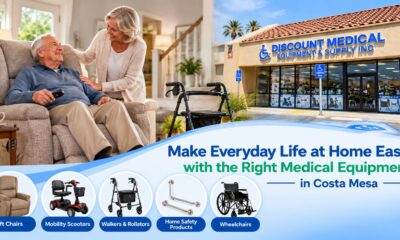
Discount Medical – Mobility Equipment & Supplies provides medical supplies, mobility equipment, rentals, repairs, and personalized assistance to Southern California families.
Riverside
For families searching for a medical supply store Riverside CA, Discount Medical – Mobility Equipment & Supplies has two established Riverside locations:
Magnolia Avenue Location
10403 Magnolia Avenue, Suite A
Riverside, CA 92505
Downtown Riverside Location
3570 14th Street
Riverside, CA 92501
The Riverside locations give families a local resource for mobility equipment, rentals, repairs, home-care products, and other medical supplies Riverside CA customers may need during recovery or for ongoing daily support.
For people whose needs are temporary, equipment rental Riverside options may include knee scooters, wheelchairs, mobility scooters, hospital beds, patient lifts, oxygen equipment, and other recovery products depending on availability.
Having access to Riverside medical supplies and rental equipment locally can be especially helpful when needs change during recovery. Families can ask questions and compare options rather than making every decision based solely on products they find online.
Costa Mesa
Discount Medical – Mobility Equipment & Supplies has also expanded into Orange County with its medical supply store in Costa Mesa:
Costa Mesa Location
2300 Harbor Blvd., Suite K-1
Costa Mesa, CA 92626
The Costa Mesa location gives Orange County families another local option for medical supplies, mobility equipment, rentals, and personalized assistance.
Cathedral City
Discount Medical – Mobility Equipment & Supplies is also expanding into the Coachella Valley:
Cathedral City Location — Soft Opening September 2026
30900 Date Palm Dr
Cathedral City, CA 92234
The Cathedral City location will provide another convenient resource for people seeking medical supplies, mobility equipment, rentals, and local assistance in the area.
Because rental inventory can vary by location, it’s a good idea to contact the appropriate store before visiting for a specific piece of equipment.
Renting Gives Families Another Option
Needing medical equipment doesn’t automatically mean you need to buy it.
Sometimes purchasing is the right long-term decision.
Other times, renting simply makes more sense.
A knee scooter may only be necessary while an injury heals. A hospital bed may only be needed during the early weeks after surgery. A wheelchair may help during a temporary period of weakness. A mobility scooter might only be needed for travel or a special event.
The best decision depends on why the equipment is needed and how long it will realistically be used.
For Riverside families, equipment rental Riverside options can provide flexibility when mobility or recovery needs are temporary. For someone dealing with an appropriate foot or ankle recovery, a knee scooter rental may provide another short-term solution.
The important thing is to plan ahead whenever possible, ask questions, follow healthcare guidance, and choose equipment based on the person’s actual needs.
Sometimes buying is the right investment.
But when the need is temporary, renting can provide the support you need without turning a short-term recovery into a long-term purchase.
Frequently Asked Questions
Is it better to rent or buy medical equipment?
It depends primarily on how long the equipment will be needed, how frequently it will be used, and whether the person’s needs are expected to change. Renting can make sense for temporary recovery or short-term use, while buying may be more practical for long-term needs.
What types of medical equipment can be rented?
Depending on the provider and current inventory, rental options may include knee scooters, wheelchairs, mobility scooters, hospital beds, patient lifts, oxygen equipment, and other mobility or recovery products.
Can I rent medical equipment after surgery?
Yes, depending on availability and individual needs. Temporary equipment may be useful when someone returns home with mobility or recovery limitations following surgery.
Can I get equipment rental in Riverside?
Yes. Discount Medical – Mobility Equipment & Supplies provides equipment rental Riverside options through its Riverside locations. Availability varies, so it’s best to check with the store when looking for a particular item.
Can you rent a knee scooter instead of buying one?
Yes, depending on local availability. A knee scooter rental can make sense when the device is only expected to be needed during a temporary foot, ankle, or lower-leg recovery.
Where can I find a medical supply store in Riverside?
Discount Medical – Mobility Equipment & Supplies has two Riverside locations, including its Magnolia Avenue and Downtown Riverside stores. Families looking for a medical supply store in Riverside California can find mobility equipment, rentals, repairs, home-care products, and other medical supplies through its Riverside locations.
Does Discount Medical – Mobility Equipment & Supplies have a Costa Mesa location?
Yes. The Costa Mesa location is at 2300 Harbor Blvd., Suite K-1, Costa Mesa, CA 92626, providing Orange County customers with local access to medical supplies, mobility equipment, rentals, and assistance.
Is there a Discount Medical – Mobility Equipment & Supplies location in Cathedral City?
Yes. The Cathedral City location at 30900 Date Palm Dr, Cathedral City, CA 92234 has a soft opening planned for September 2026.