Home Improvement
Why Bees Suddenly Appear Everywhere in March (And What It Really Means)

Every year as winter begins fading and early spring approaches, homeowners start noticing something that seems to happen almost overnight.
Suddenly, bees appear everywhere.
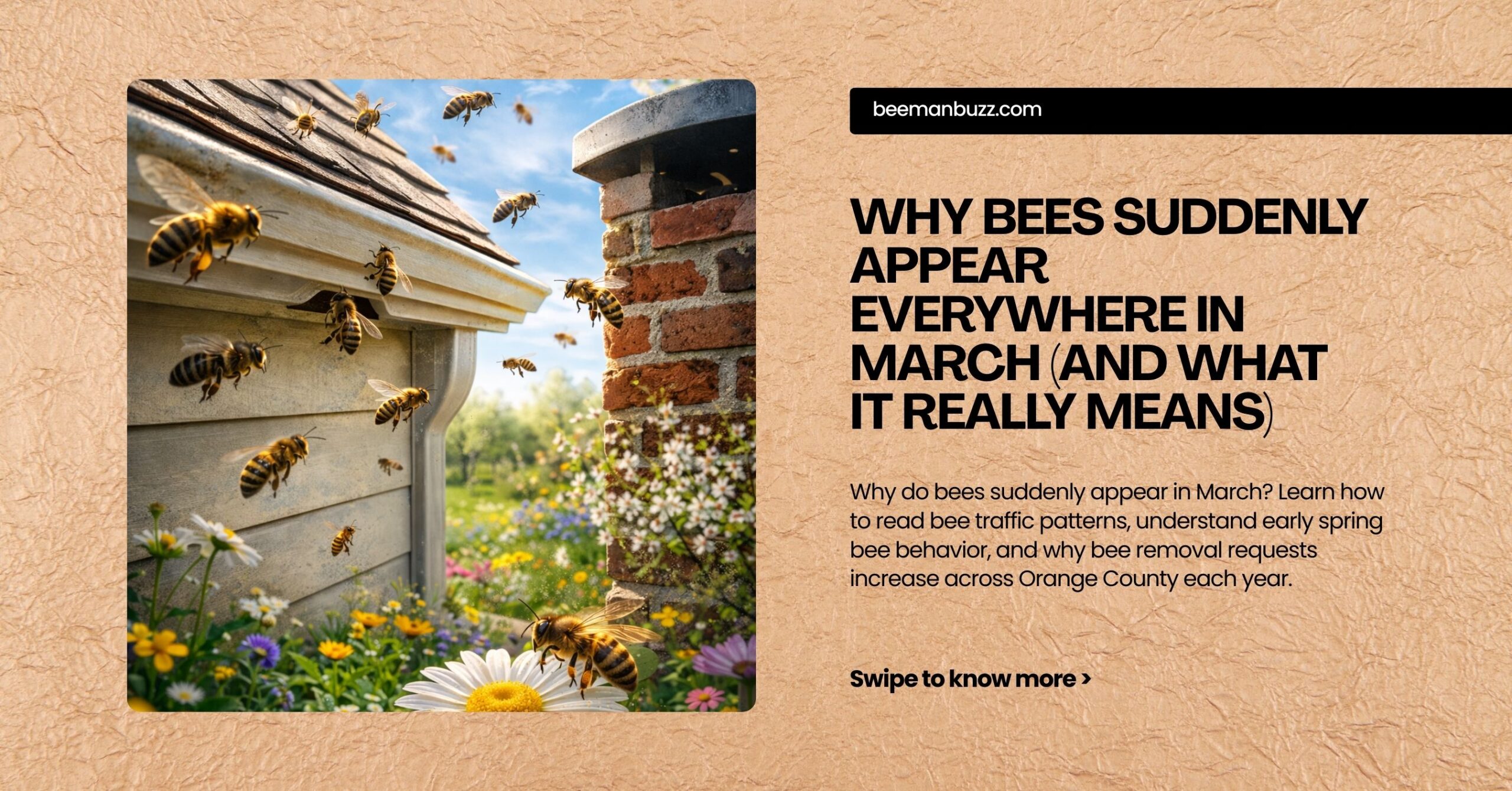
They can be seen flying around gardens, rooftops, chimneys, trees, fences, and flowering plants. One week there may be almost no visible activity, and the next week bees are buzzing across entire neighborhoods.
For many homeowners, this sudden increase raises concerns. Some begin searching online for bee and wasp removal services or looking for experienced bee and wasp exterminators because they worry a hive may be forming inside their home.
But in most cases, what people are seeing is not a sudden infestation.
Instead, it’s the natural start of the spring pollination season.
At BeeManBuzz, this seasonal shift is one of the most common topics we hear about every year as bee activity begins increasing throughout Southern California and across Orange County.
Understanding why bees suddenly appear in March — and learning how to read bee traffic patterns — can help homeowners determine whether bees are simply visiting flowers or investigating a potential hive location.
The Seasonal Shift That Happens Inside the Hive
Honeybee colonies spend winter in a completely different mode than they do during spring and summer.
During colder months, bees remain inside the hive most of the time. They cluster tightly together to generate heat while consuming stored honey to survive until warmer weather arrives.
The queen dramatically slows egg production during winter because the colony cannot support a large population when flowers are scarce.
However, as temperatures begin rising and daylight hours grow longer, the hive begins preparing for expansion.
March is when this shift becomes noticeable.
Several major changes occur inside the colony:
The queen begins laying significantly more eggs. Worker bees begin collecting pollen to feed developing brood. Foraging flights increase rapidly. Scout bees begin searching for potential nesting sites for future colony expansion.
These changes lead to a dramatic increase in bee activity outside the hive.
To homeowners, it may appear that bees suddenly appeared overnight. In reality, the colony has been present the entire winter — it is simply becoming active again.
Why Early Spring Flowers Trigger Bee Activity
Another reason bees suddenly become visible in March is the appearance of early spring flowers.
Plants begin blooming as temperatures rise, and those flowers provide the nectar and pollen that bees need to support colony growth.
Some of the first flowers bees visit in early spring include crocus, grape hyacinth, fruit tree blossoms, rosemary, wildflowers, and even dandelions.
These early blooms are extremely important for bee colonies because they provide the nutrition needed to support the rapidly growing population inside the hive.
As bees begin visiting these flowers across neighborhoods and gardens, their increased presence becomes much more noticeable.
Understanding Bee Traffic in Early Spring
One of the most useful ways to determine what bees are doing near your home is by observing bee traffic.
Bee traffic refers to consistent flight patterns where bees repeatedly travel toward or away from a specific location.
These patterns can reveal whether bees are simply visiting flowers or if they are investigating a potential nesting site.
This behavior is explored in more detail in the BeeManBuzz article What Bee Traffic Patterns Tell You About Hive Location and Whether February Bees Are Looking for Food or a New Home.
Watching bee traffic carefully can provide clues about the type of activity taking place.
If bees appear scattered and move randomly between flowers, they are most likely foraging.
If bees repeatedly fly in and out of the same small opening, it may indicate that a hive is already present or that scout bees are investigating the location.
How to Tell If Bees Are Just Visiting
Most bees seen in early spring are simply pollinating nearby flowers.
Worker bees travel long distances from their hive to gather nectar and pollen, which means the hive itself may be located hundreds of yards — or even miles — away.
When bees are visiting flowers, their movement tends to appear scattered. They fly from flower to flower without following a repeated path toward a specific structure.
Seeing bees pollinating plants is actually beneficial for the environment and for local gardens.
Honeybees play a major role in pollinating fruit trees, vegetables, and wild plants. Without pollinators, many ecosystems and agricultural systems would struggle to function.
When Bees May Be Investigating Your Home
Sometimes bee behavior appears more focused.
Homeowners may notice bees flying repeatedly toward a roofline, chimney, wall cavity, attic vent, or small opening in the exterior of a building.
When bees behave this way, they are often scout bees.
Scout bees search for potential nesting locations before colonies expand or swarm later in the season.
From the perspective of a bee colony, buildings can provide ideal nesting environments.
Homes often contain dry, sheltered cavities that resemble the hollow trees bees naturally prefer in the wild.
Because of this, bees may explore chimneys, attic spaces, roof gaps, and wall voids early in the season.
Attempting to seal these openings without understanding bee behavior can sometimes create bigger problems, which is explained in
Why Sealing a Bee Entry Point in February Makes Things Worse for Chimneys.
Why Bee Removal Requests Increase in March
As bee activity becomes more visible across neighborhoods, calls for bee removal Orange County services begin increasing significantly.
This seasonal spike happens for several reasons.
First, bees become much easier to notice when temperatures warm. Colonies that were relatively quiet during winter suddenly have dozens of worker bees flying in and out of the hive.
Second, scout bees begin exploring potential nesting sites weeks before swarming occurs. These scouts may inspect buildings, trees, and other cavities.
Third, the colony itself is growing rapidly.
Inside the hive, the queen increases egg production dramatically. As new bees emerge, the colony requires larger amounts of pollen and nectar.
This leads to a surge in foraging flights.
Because of this increased activity, homeowners may begin searching for bee removal Irvine or similar local services if bees appear to be entering their home or forming a hive nearby.
Why February Is Often the Calm Before the Buzz
Interestingly, February is often one of the quietest months for bee removal calls.
During late winter, bee colonies are still relatively inactive. They remain clustered inside the hive and fly only occasionally when temperatures allow.
However, once the first warm days of early spring arrive, bee activity increases dramatically.
This seasonal shift is explained further in the article Why February Is the Calmest Time for Professional Bee Removal and Why Bees Suddenly Appear on the First Warm Days of the Year.
Once spring begins, the buzzing season truly starts.
When Professional Bee or Wasp Removal May Be Necessary
Most bees seen in early spring are simply pollinating flowers and do not require removal.
However, if bees begin entering a structure regularly or if a hive begins forming inside a wall, roofline, attic, or chimney, professional removal may be necessary.
Experienced bee removal Orange County specialists can safely remove or relocate colonies while preventing structural damage.
In some cases homeowners may encounter aggressive stinging insects such as yellow jackets or wasps rather than honeybees.
When that happens, contacting a licensed wasp exterminator in Orange County is often necessary to safely remove the nest.
Why Understanding Bee Behavior Helps Everyone
Learning how to recognize bee activity helps homeowners avoid unnecessary panic while still recognizing situations that require professional attention.
Most bees seen in March are simply doing what they have done for millions of years: pollinating flowers and supporting ecosystems.
March marks the transition from winter survival to spring expansion for honeybee colonies.
For homeowners, it’s the moment when the quiet winter months end and the buzzing season begins again.
And when you start noticing bees flying across gardens, orchards, and neighborhoods, it’s often one of nature’s clearest signs that spring — and pollination season — has officially arrived.